Twenty-five years ago, outpatient surgery looked considerably different than it does today.
Procedures were less complex. Technology was less sophisticated. Major surgeries that can now send patients home the same day often required a hospital stay. And the idea of creating a facility specifically designed around efficient, convenient outpatient surgery was still relatively new in many communities.
In Cedar Rapids, however, local physicians and St. Luke’s Hospital were already looking ahead. In 2001, community physicians partnered with St. Luke’s to develop an ambulatory surgical unit built around a straightforward idea: many patients who needed surgery did not necessarily need to be hospitalized. They needed excellent physicians, highly trained clinical teams, the right technology and a facility designed specifically for their procedure and recovery.
That early partnership ultimately developed into Surgery Center Cedar Rapids, which began operating as SCCR in 2003 and has since become an important part of the healthcare landscape in Cedar Rapids and Eastern Iowa.
Twenty-five years after that original vision began, the premise remains remarkably similar.
The capabilities, however, have changed dramatically.
From Traditional Outpatient Surgery to Advanced Surgical Care
In the early 2000s, an ambulatory surgery center was generally associated with procedures that were relatively straightforward and well suited to a same-day setting: cataract procedures, endoscopy, ENT surgery, minor orthopedic procedures and other surgeries that did not require hospitalization.
The technology available to physicians was advanced for its time, but the tools surgeons have at their disposal today would have been difficult to imagine when the original center was being developed.
Over the years, improvements in surgical techniques, anesthesia, pain management, imaging, instrumentation and patient recovery protocols have allowed increasingly sophisticated procedures to safely move from hospitals into outpatient settings.
Surgery Center Cedar Rapids has continued to invest alongside those advancements.
Today, SCCR provides care across numerous specialties, including orthopedics, ophthalmology, ENT, gastroenterology, general surgery, gynecology, hand surgery, oral surgery, plastic surgery, podiatry, spinal surgery, urology and vascular surgery.
Perhaps one of the clearest examples of that evolution is joint replacement.
There was a time when receiving a new hip or knee almost automatically meant several days in a hospital. SCCR and local physicians helped bring same-day total joint replacement to the Cedar Rapids market, developing protocols that allow appropriately selected patients to have their procedure, begin walking and rehabilitation within hours and recover at home rather than spending the night in a hospital.
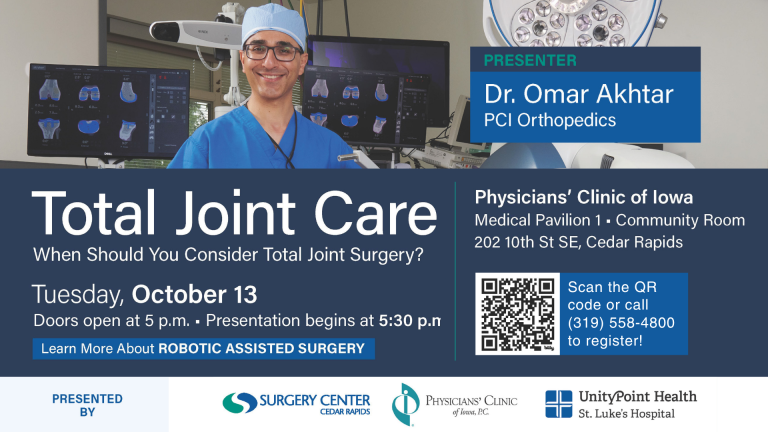
In 2024, SCCR took another major step forward by introducing Mako SmartRobotics™ for same-day total knee and hip replacement. The system uses a CT-based 3D model of a patient’s anatomy to help surgeons develop an individualized surgical plan and provides robotic assistance during the procedure to help achieve precise implant positioning and alignment. SCCR became the only outpatient surgery center in the Cedar Rapids Corridor offering the technology.
That is a remarkable progression from what outpatient orthopedic surgery meant when the center’s story began.
And it is not the only example.
SCCR has expanded its ophthalmology capabilities to include advanced cataract and corneal procedures and now performs more cataract surgery than any other facility in Cedar Rapids.
Its sleep apnea program has also put Cedar Rapids on an international stage. In 2025, SCCR was named one of only three global preceptor sites for the Inspire V system, allowing surgeons from around the world to visit Cedar Rapids and observe advanced implantation techniques and best practices.
Technology that once required patients to travel to larger metropolitan medical centers is increasingly available right here at home.
The Facility Grew Along With the Medicine
As outpatient surgery expanded, Surgery Center Cedar Rapids had to expand with it.
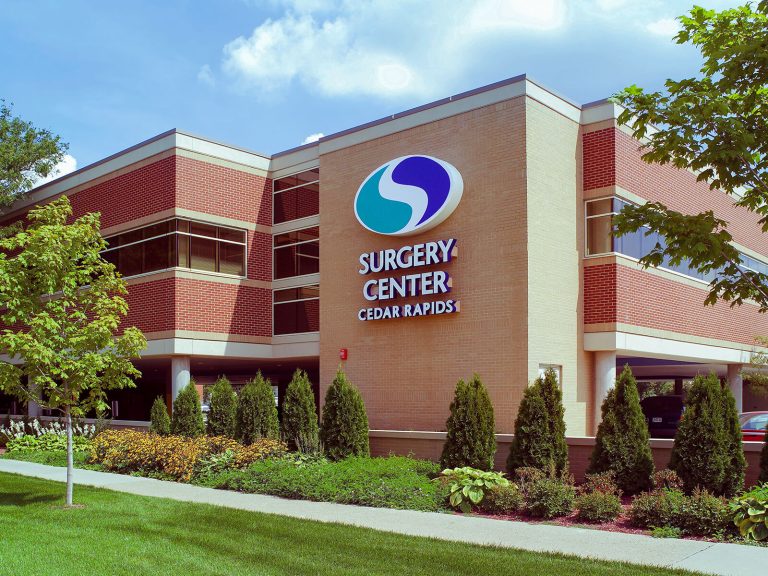
A significant 2014 project added approximately 7,000 square feet to the facility, including two additional operating rooms, 12 patient care rooms and a dedicated patient entrance. The expansion was not simply about accommodating more procedures. It was deliberately designed around the outpatient experience, including easier access for patients with mobility limitations, greater privacy and spaces that allowed families to remain closer to patients before and after surgery.
That focus on the patient experience has remained one of SCCR’s defining characteristics.
The surgery center model eliminates many of the complications inherent in a large hospital environment. Parking is close. Scheduled procedures are less likely to be displaced by emergencies. Patients prepare and recover in private rooms. Families can remain involved. And because the facility exists specifically for surgical and procedural care, teams and spaces are designed around moving patients safely and efficiently through that experience.
For patients, that can also translate into meaningful financial savings. SCCR reports that patient costs are typically 30 to 40 percent lower than comparable hospital settings.
By 2018, Surgery Center Cedar Rapids had performed its 100,000th procedure. At that point, SCCR estimated that its outpatient model had saved patients and insurance providers approximately $114 million compared with performing those same procedures in hospital-based settings, including more than $22 million in patient copays and deductibles.
Those numbers demonstrate something important about the role SCCR has played in Cedar Rapids.
Its impact has never been limited to the operating room.
A Cedar Rapids Partnership From the Beginning
The word “community” can become easy shorthand in healthcare marketing. In the case of Surgery Center Cedar Rapids, it is part of the organization’s structure.
SCCR grew from a partnership involving St. Luke’s Hospital and Cedar Rapids-area physicians. Over the years, more than 100 community surgeons and anesthesiologists have participated in that partnership, serving not simply as physicians using the facility but as active participants in its medical leadership and governance.
That local connection has helped create a different kind of healthcare organization.
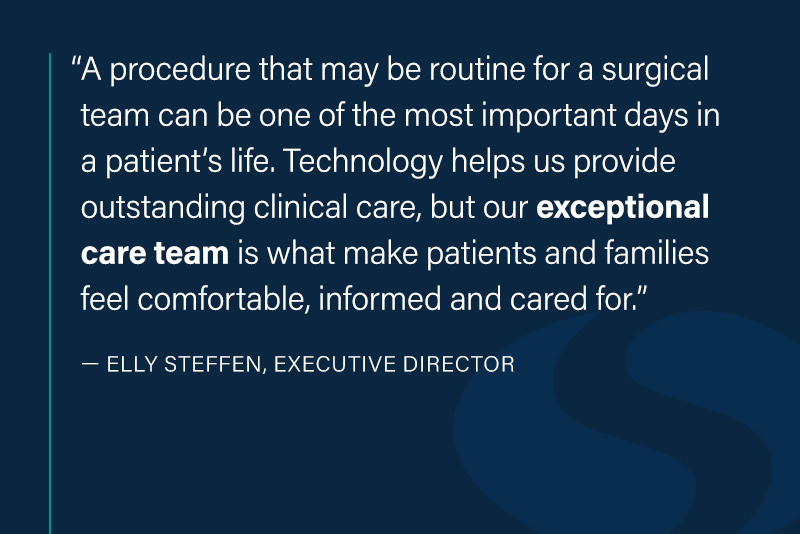
The physicians operating at SCCR are also physicians treating patients throughout the community. The nurses, surgical technologists, sterilization specialists and administrative staff live here. Patients frequently arrive knowing their physician and leave to recover only a few miles from home.
SCCR’s central location in the MedQuarter, across from UnityPoint Health – St. Luke’s Hospital and adjacent to other medical providers, reinforces that connection. It allows an independently focused outpatient surgical environment to remain closely connected to Cedar Rapids’ larger healthcare ecosystem.
The organization’s involvement also extends outside the building. SCCR and its staff participate in local events and community activities while continuing to work alongside healthcare providers throughout the area to make advanced treatment available closer to home.
Technology Changes. The Human Part Doesn't.
Looking back across 25 years, it is tempting to define progress by technology.
Certainly, there is plenty to point to.
Operating rooms are more advanced. Surgical instruments are more precise. Robotic technology can help surgeons plan procedures around an individual’s anatomy. Procedures once requiring hospitalization are now routinely performed on an outpatient basis. Recovery protocols have improved. Patients are getting home sooner.
But ask someone who has spent years caring for patients at Surgery Center Cedar Rapids, and the biggest change may not be what has happened inside the operating room.
It may be what hasn’t changed.
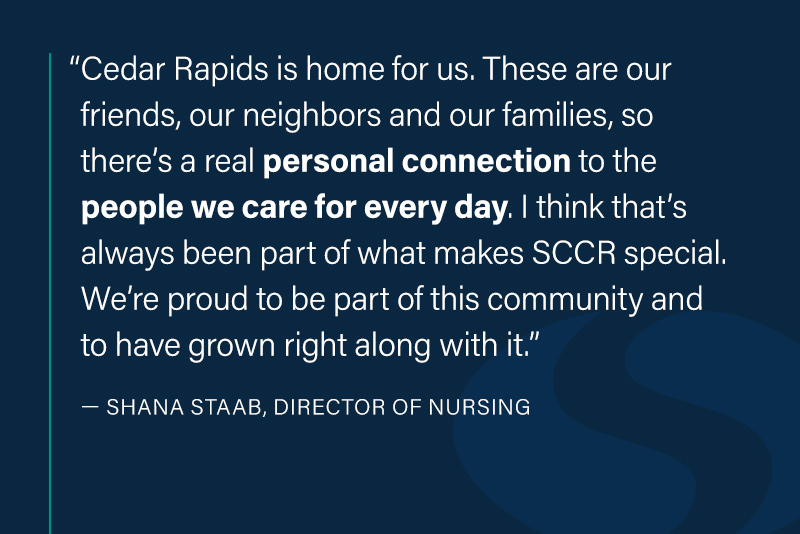
A surgery that physicians and nurses perform routinely may be a once-in-a-lifetime experience for the person lying on the operating table.
That patient may be nervous. A spouse may be worried. A parent may be waiting nearby. Someone may simply want to know that the people caring for them understand that this day is anything but routine.
Technology can improve a procedure.
People create the experience.
The Next 25 Years
The last quarter-century offers a good lesson about trying to predict the future of medicine.
In 2001, same-day robotic-assisted joint replacement would have sounded extraordinarily ambitious. A Cedar Rapids outpatient facility serving as an international training site for implantable sleep apnea technology would have been equally difficult to envision.
Today, both are happening.
And the movement toward outpatient healthcare continues.
Advancements in surgical techniques, anesthesia, technology and recovery will almost certainly allow additional procedures to migrate safely into ambulatory settings. Patients will continue expecting greater transparency, convenience and value. And healthcare organizations will face increasing pressure to deliver excellent outcomes while controlling costs.
That environment is precisely what Surgery Center Cedar Rapids was created for.
Twenty-five years ago, a group of Cedar Rapids physicians and healthcare leaders recognized that there could be a better way to deliver certain types of surgical care.
They built it.
Over the years, thousands of patients, physicians and staff members have helped improve it.
And while the equipment, procedures and technology inside Surgery Center Cedar Rapids may look dramatically different than they did when the idea began in 2001, the goal remains remarkably familiar:
Provide exceptional surgical care, make the experience easier for patients and families, and give the people of Cedar Rapids access to outstanding healthcare close to home.
After 25 years, that original idea hasn’t gotten older.
It’s become more relevant than ever.